How I Help My Son Remember His Grandparents Between Visits
Small things we do at home so grandparents who live far away stay part of everyday life, not just holidays and video calls. A mum's tips, with the books we read.
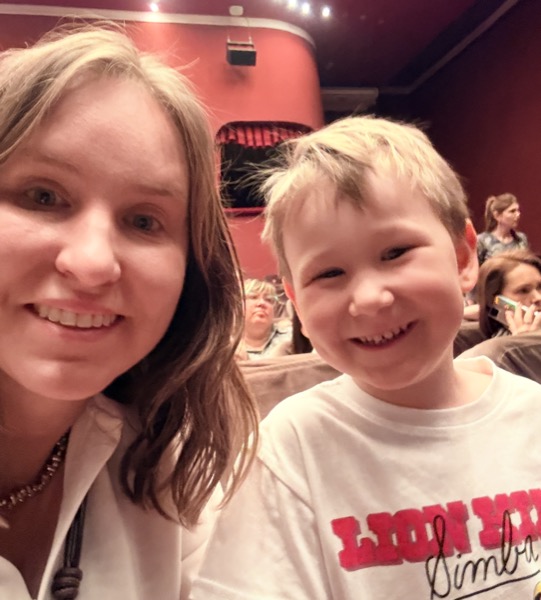
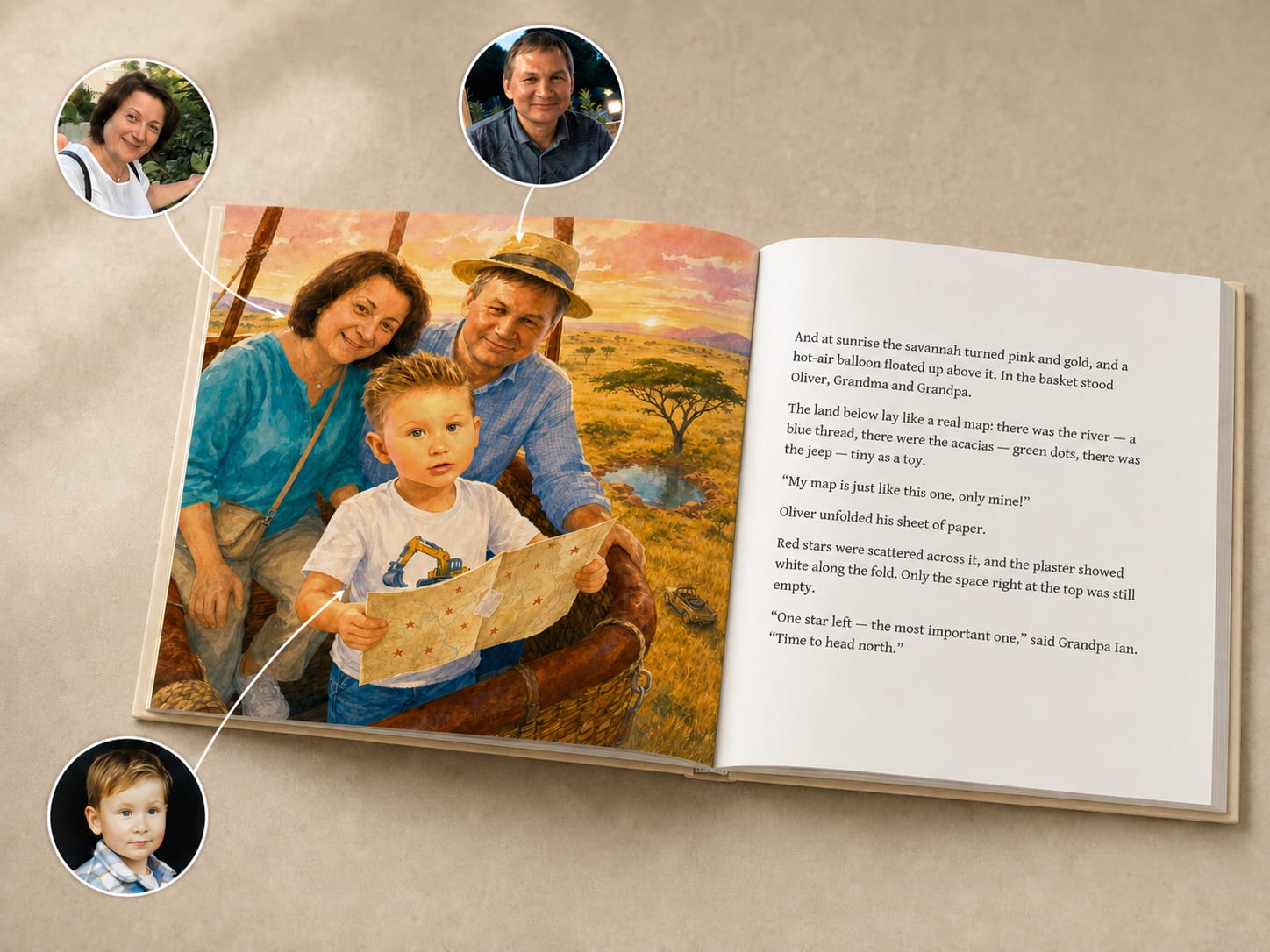
Children remember grandparents who live far away through shared stories, repeated activities and things that clearly belong to that person — not through being told who they are. So I give each of my son's grandparents a "thread" of their own: a hobby, something we repeat at home, a story they are both in.
My son's grandparents live far away. We see them only a few times a year, so I think a lot about how to help him stay close to them in between visits.
I've learned that children don't remember relationships just because we tell them, "This is from Grandma," or "Say hello on the phone." They remember relationships through shared stories, repeated activities, and things that clearly belong to that person.
That's what works for us.
We connect each grandparent to something special
I try to make sure each grandparent has a clear "thread" in Oliver's mind — something he connects with them naturally.
With my mother: history, archaeology and theatre
My mother is a historian, and my son knows and admires that about her.
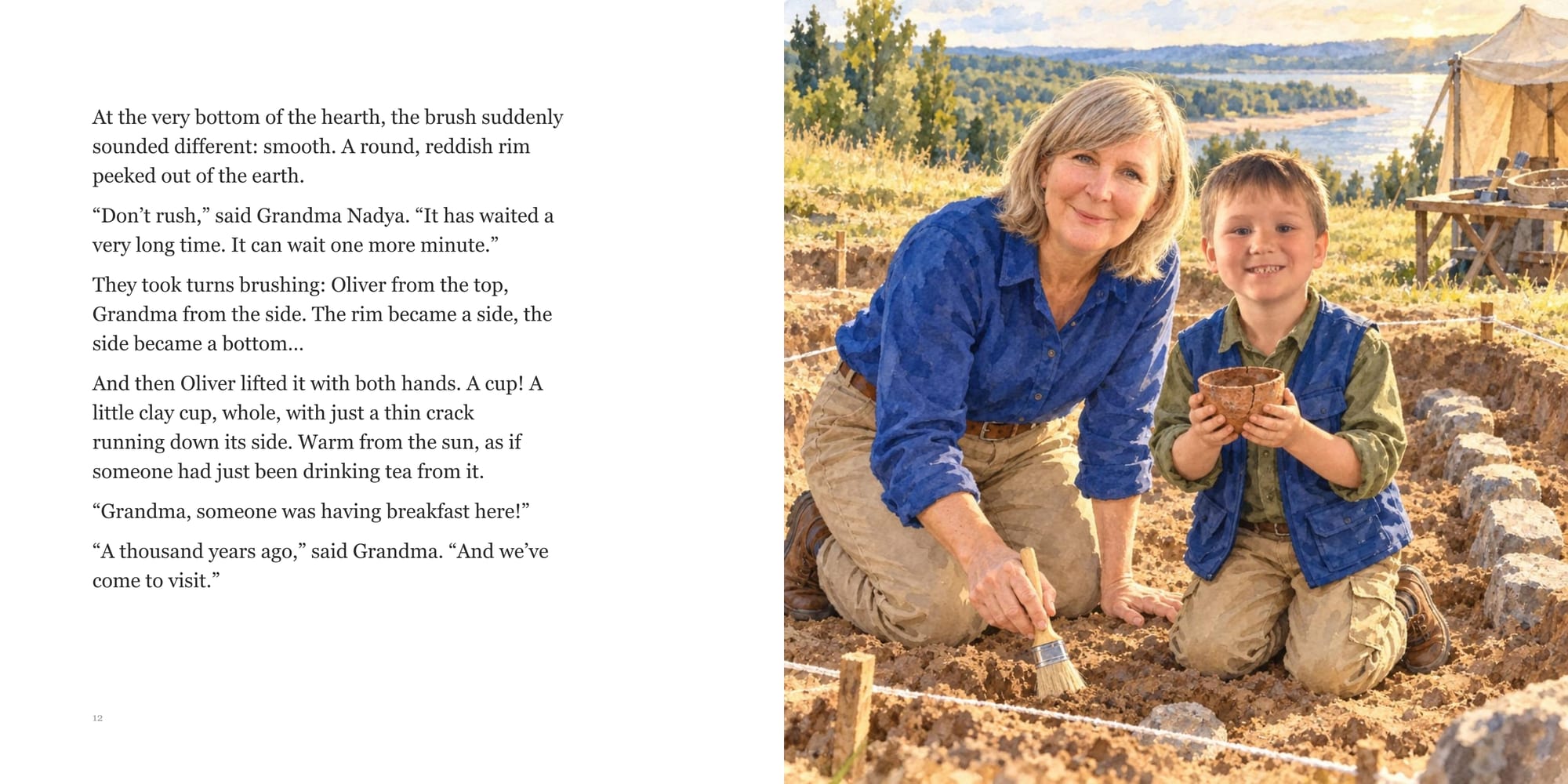
That's why his favourite personalized stories are the ones where they go on archaeological adventures together. They dig for treasures, explore the past, and solve mysteries. For him, Grandma is not just a relative he sees sometimes. She is the grandma who loves history.
They also share another thing: theatre.
Whenever we visit her, they love going to the theatre together. So he connects her not only with books and stories, but with a real tradition they share.
That matters. When he thinks of her, he already knows who she is and what they do together.
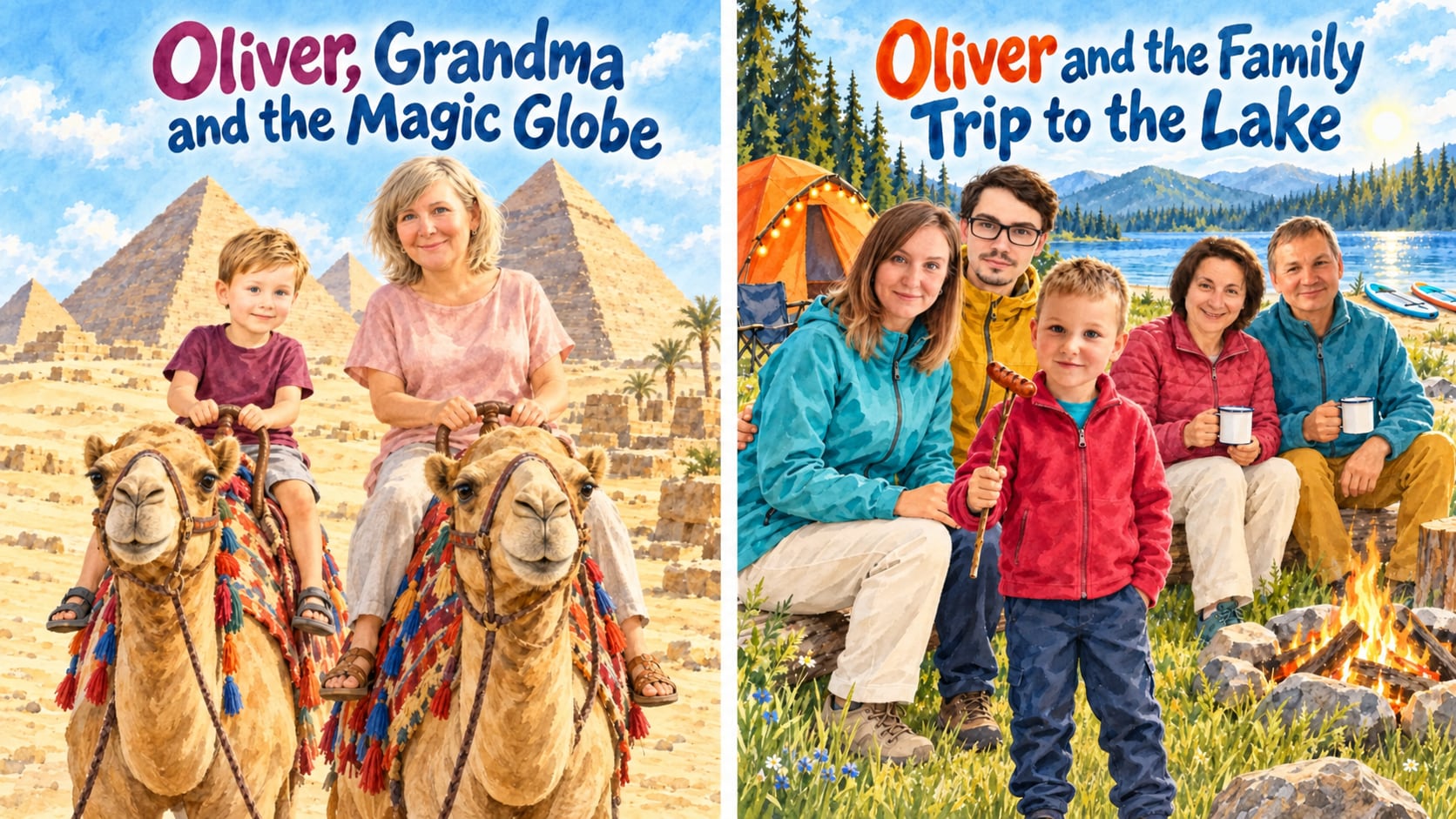
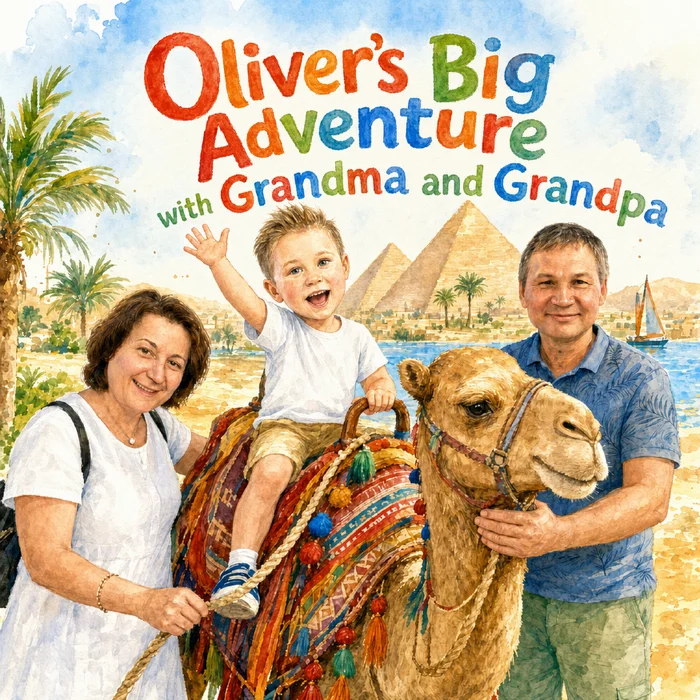
We also travelled to Egypt together — Oliver, me and my mother. When we came home, we turned our Egypt memories into books: the camels by the pyramids, the water slides, and the fish of the Red Sea, one of which he named the "broom fish" because of its huge black tail. Now he can reread the trip whenever he likes, and every time he does, Grandma is there with him.

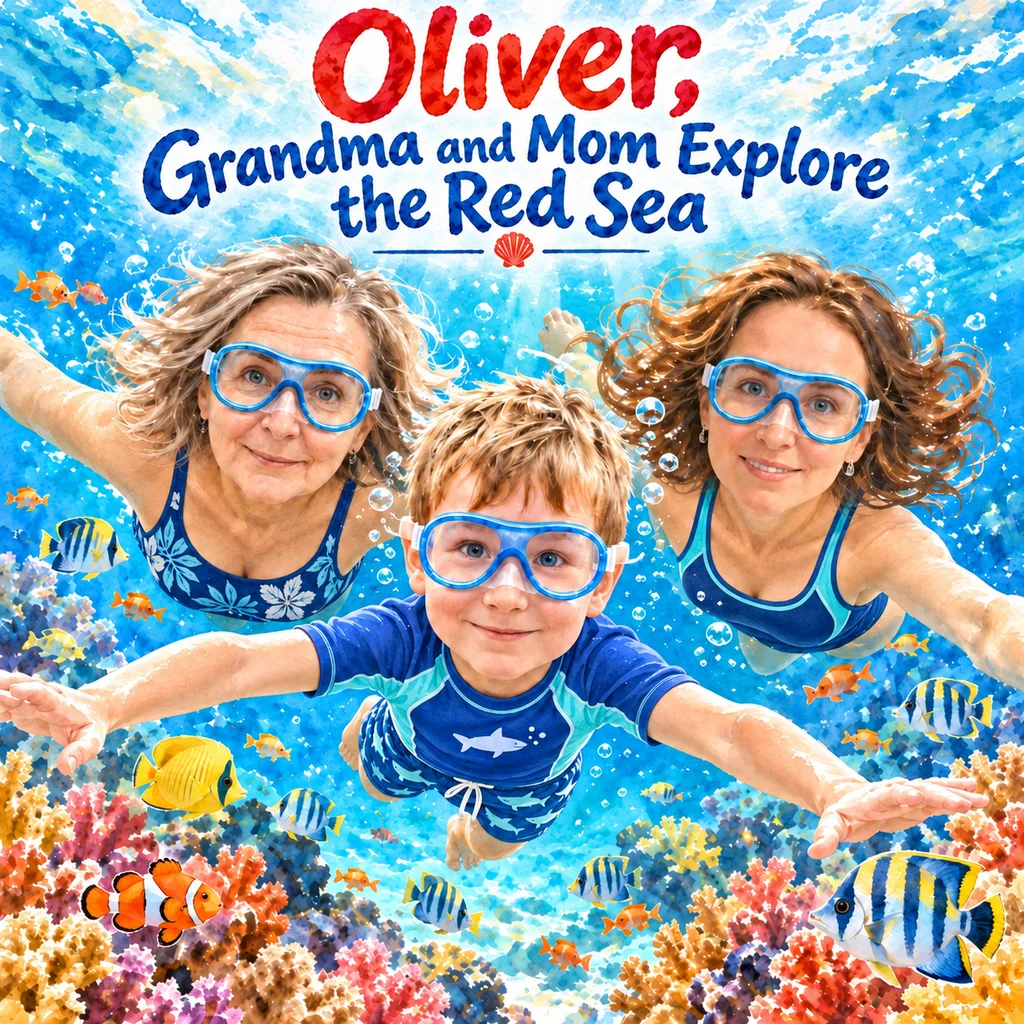
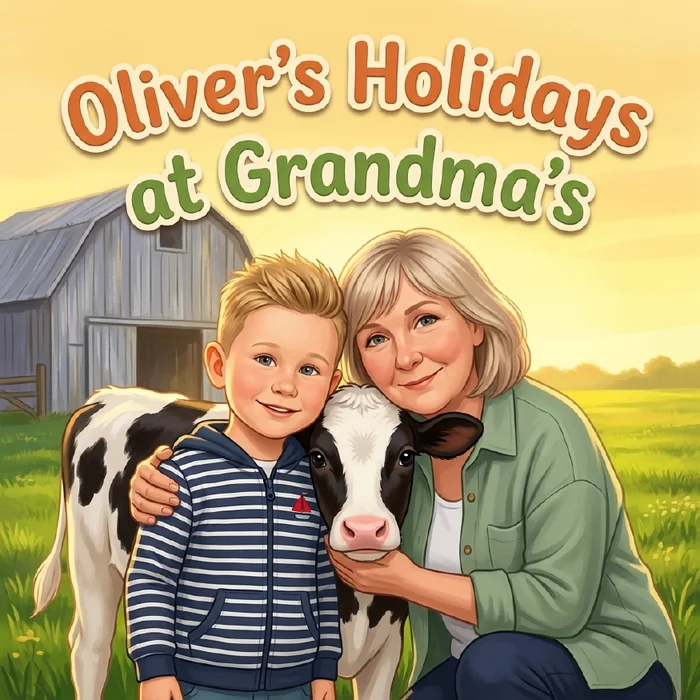
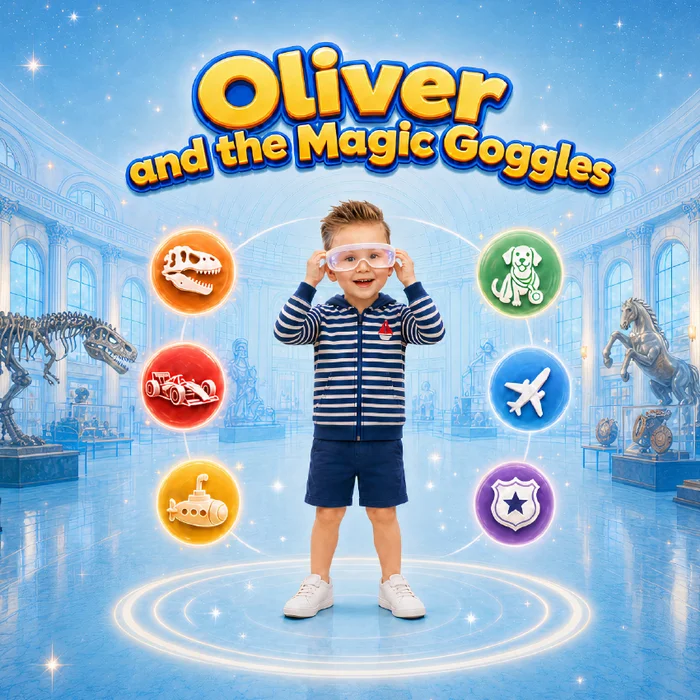
She is in more of his books, too — a summer on her farm, and a day trying out jobs with a pair of magic goggles:
With his other grandma: crochet and pancakes
His second grandma makes beautiful crocheted toys.
We have some of her handmade things at home, and he knows exactly who made them. If I ask him what Grandma does best, he says she crochets.
They also make pancakes together.
So when we make pancakes at home, it becomes another little bridge between them. He remembers: this is what we do with Grandma.
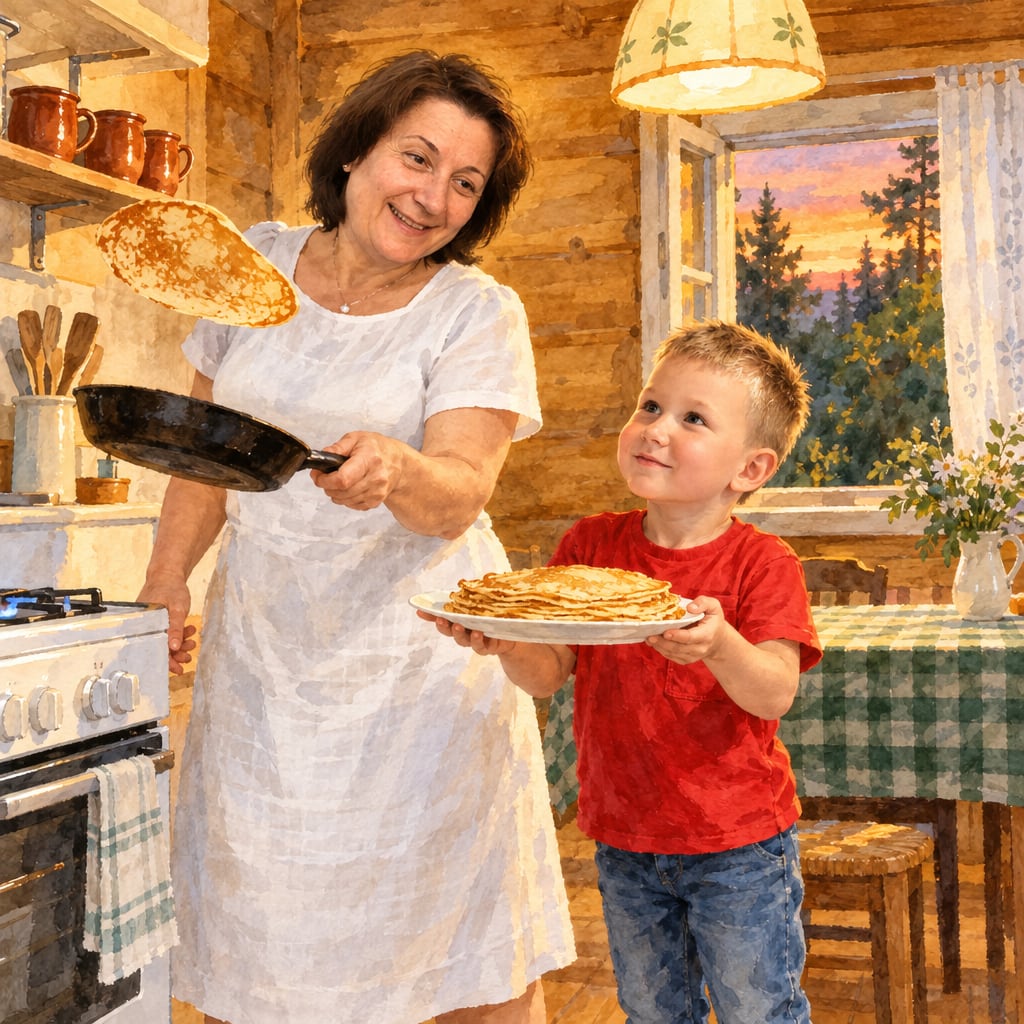
Again, it's not abstract. It's not "this is your grandma." It's something real, familiar, and repeated.
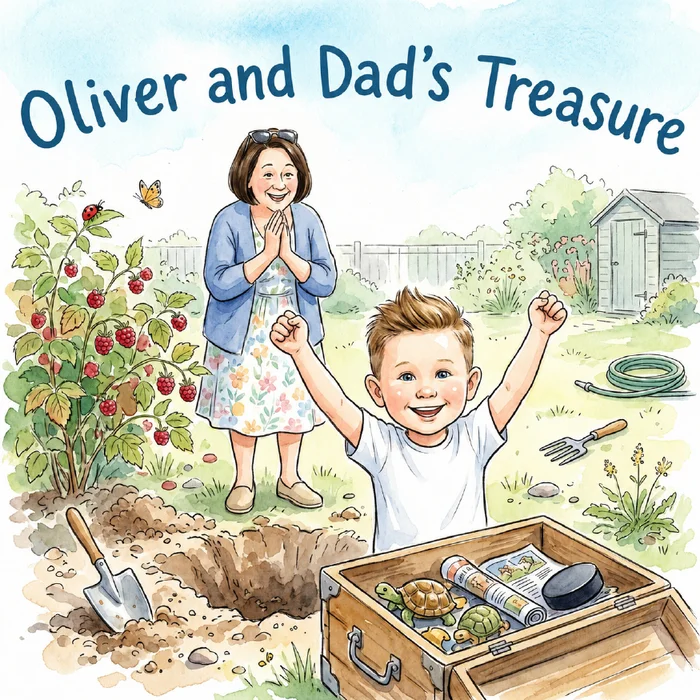
In his books she helps him dig up Dad's childhood treasure in the garden, and leads his camel past the pyramids, with Grandpa on the other side:
With Grandpa: building and fixing things
With Grandpa, it's all about making and fixing things.
They build, repair, and figure things out together. So when my son is doing something similar at home, I remind him: you and Grandpa are handymen. Or sometimes I say: you and Grandpa are inventors.
That gives him a simple identity connection. He knows what they have in common.
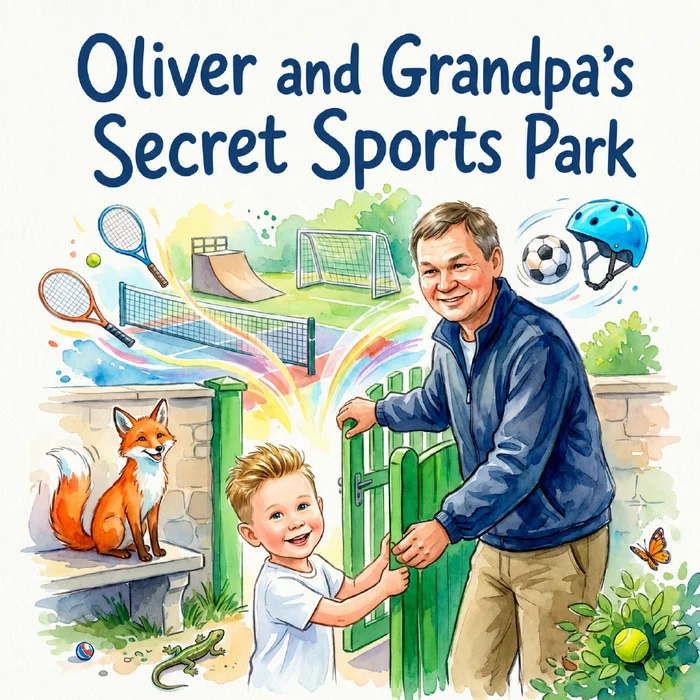
In their books, Grandpa opens a gate to a secret sports park, and cheers Oliver over the jumps of a bike park:

Phone calls work better when there is something to talk about
Video calls are much easier when a child already has shared topics with a grandparent.
Instead of asking, "How are you?" and getting silence, there is something real to talk about:
- the theatre they went to,
- the crocheted toy at home,
- the pancakes we made,
- the thing he built,
- the story they read together.
That's when calls start feeling less forced and more natural.
Visits feel easier too
I also notice that visits go better when the relationship has been kept alive in small ways.
They don't need to start from zero every time.
My son already knows: this is the grandma who loves history and theatre. This is the grandma who crochets and makes pancakes. This is the grandpa who builds and fixes things.
So when they meet, they continue something that already exists.
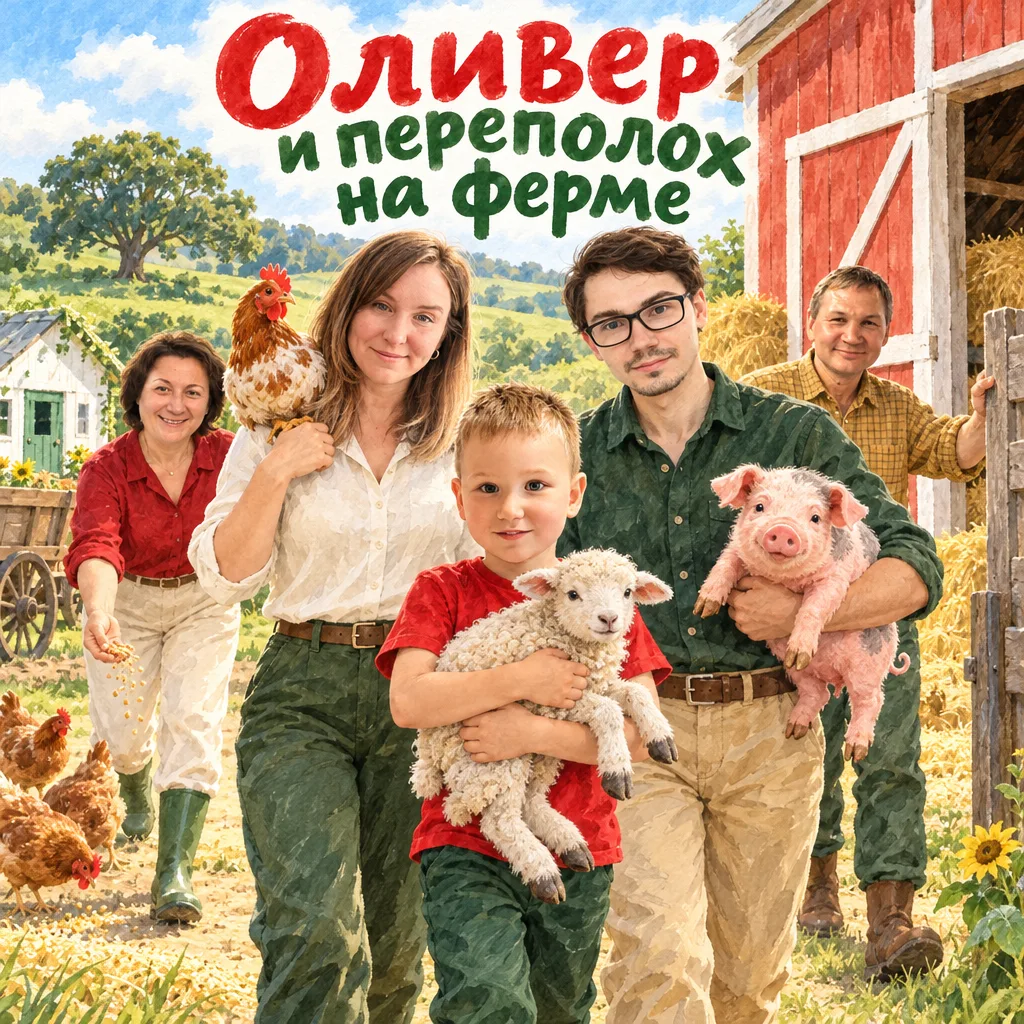
Sometimes the whole family goes into one story. In this one Oliver, his parents, his other grandma and Grandpa catch runaway hens and a piglet on a farm, and Oliver is the one who finds the lost lamb:
What helps most
If I had to simplify it, I'd say this:
Children remember grandparents better when grandparents are connected to:
- a shared hobby,
- a repeated activity,
- a story,
- and something visible at home.
That's what I try to build.
Not just memories of gifts, but a sense of who this person is and what they mean to him.
When families live far apart, these little threads matter a lot.
They help the relationship stay alive between visits.
More story ideas: with Grandma, with Grandpa, and with both grandparents. For gifts, here's what I recommend in gifts for grandchildren who live far away, and how I write our stories in AI stories for kids and long-distance grandparents.
Frequently asked questions
How can a child stay close to grandparents who live far away?
Give each grandparent a clear thread in the child's mind: a shared hobby, an activity you repeat at home, a story they are both in, and something visible in the house that the grandparent made or gave. Children remember a relationship through things they do and see, not through being told who someone is.
What can a child talk about with grandparents on a video call?
Calls go better when there is something real to talk about: the theatre they went to, the toy Grandma made, the pancakes you cooked, the thing the child built, or the story they read together. Shared topics turn a silent "How are you?" into a conversation.
Can a grandparent be in a personalized book with their grandchild?
Yes. On Booku you upload a photo of the child and one of the grandparent, pick a story, and both are drawn into it, with the grandparent's real face and name. You can see the illustrated cover for free before deciding.
How much does a personalized book from Booku cost?
The illustrated cover is free to see, with no card and no sign-up. The full digital book is €6.99, and a printed hardcover can be added (+€39, plus delivery to these countries).
By Nadya Tsech, founder of Booku and mum to Oliver. I started creating personalized children's books to help my son stay close to his grandparents, even though we live far apart.
Create your free cover
Free cover · no card · no sign-up